
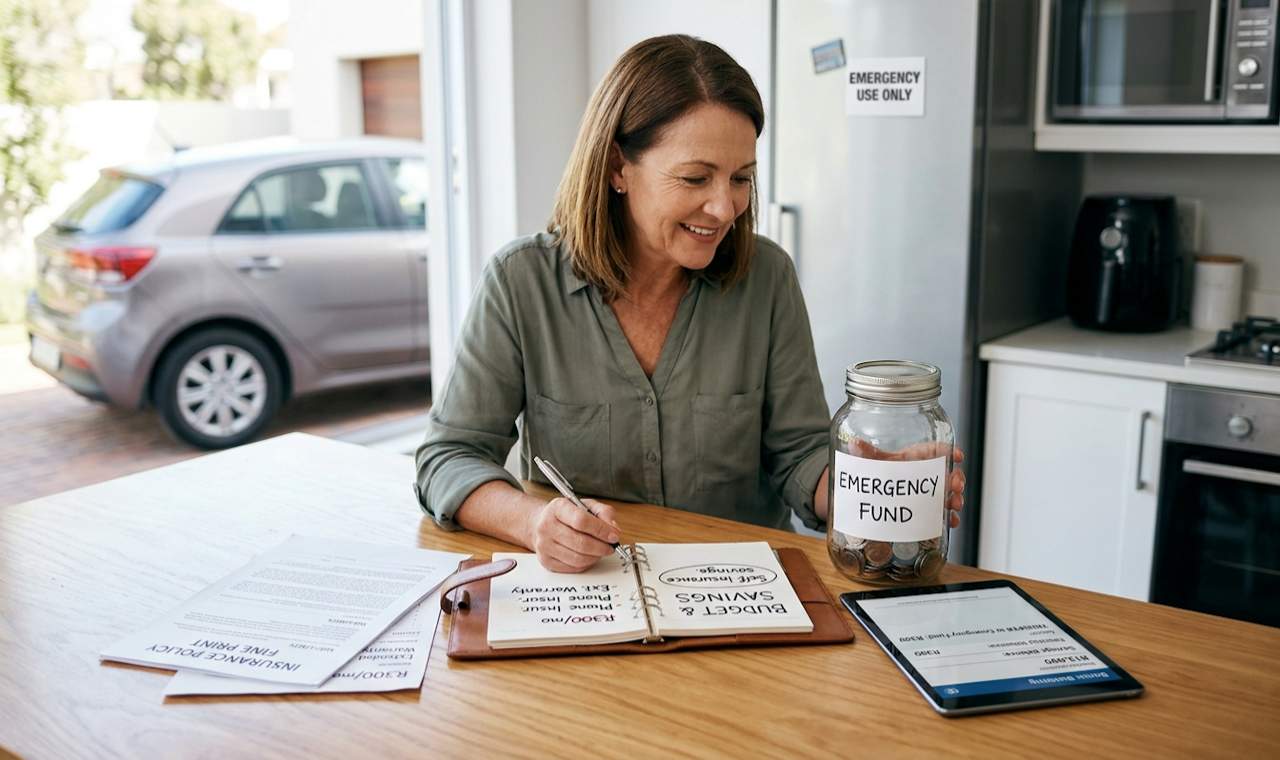
My mother recently mentioned that she was paying R300 a month for an extended warranty on her car. On paper, this sounds like sensible protection – until you examine the fine print.
Her policy came with strict per-component sub-limits, which meant the maximum it would actually pay out for any one specific event was R12 000.
 While it covered sudden mechanical failures, it excluded gradual wear and tear. Furthermore, she had to maintain pristine service records in order for the warranty to pay out.
In reality, a major gearbox failure would still leave her thousands of rands out of pocket, while a minor repair wouldn’t hit the threshold to justify a claim.
She wasn’t buying comprehensive protection; she was paying R3 600 a year for a false sense of security.
She already has a relatively healthy savings fund that she could use for repairs, and if she redirected that R300 a month to those savings, she would build an additional R8 000 safety net within two years.
And that money would be available with zero claim forms, zero assessor rejections, and zero maintenance handcuffs.
Insurance is designed to protect against catastrophic financial loss – events that would bankrupt you or set you back years.
Yet modern financial products encourage us to insure against minor, predictable inconveniences. If you are disciplined, your emergency fund can act as a far more efficient self-insurance vehicle for these micro-risks.
The micro-insurance budget leaks
Scratch and dent cover
At R150 a month, a scratch and dent policy usually caps payouts at R2 500 – R3 000 per claim, as well as enforcing strict physical limits on scratch length or dent size. A standard metallic paint repair at a body shop easily surpasses those caps.
Saving that premium yields R3 600 over two years, allowing you to pay cash directly to an independent touch-up specialist on your own terms.
Mid-tier cellphone insurance
Insuring a R6 000 smartphone costs around R90 per month, plus a compulsory R800 excess per claim.
Over two years, premiums and a single excess total nearly R3 000 – half the cost of buying the device brand new.
If you save that R90 instead, then within a year you could replace a cracked screen out of pocket without paying a cent to an insurer.
Retail extended warranties & tyre cover
Retailers push extended warranties on fridges or TVs because margins are extraordinarily high, yet modern appliances rarely fail in years two through four. Similarly, tyre insurance caps payouts based on tread-wear depreciation.
Banking those small monthly fees builds real capital rather than subsidising low-value coverage.
Increase your excess to save on the premium
Self-insurance isn’t just about cancelling minor policies; it’s also about restructuring your major ones.
You can drastically lower your comprehensive car and household premiums simply by choosing a higher basic excess.
If you increase your car insurance excess from a standard R3 500 to R15 000, your monthly premium can drop by around 30%.
By building up an emergency fund of R15 000, you free up monthly cash-flow by reducing premiums. You retain full cover for major disasters (such as total vehicle write-offs or house fires) while self-insuring for minor bumps along the way.
Discipline is key
Stop insuring the small stuff. Direct those premiums into your own account, let the interest accrue, and let your emergency fund do the heavy lifting.
But a word of warning – this does require discipline. If you’re self-insuring by redirecting your insurance savings into an emergency fund, remember that it is for emergencies. Be careful that you don’t end up spending that money on luxuries or other non-essentials.




0 Comments