
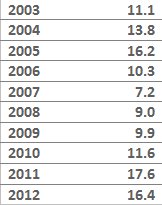
 The latest annual report from the Ombudsman for Banking Services (OBS) which was released recently showed that of the 4450 complaints received, 1753 cases were found in favour of the customer and a total of R16.4 million was paid back to aggrieved banking customers.
The cases where the majority of the rulings went in favour of the consumer included complaints around internet banking, credit cards, current accounts, debit orders and insurance. Complaints around customers being victims of scams, however, tended to favour the banks as customers were seen to be negligent in this regard.
The Banking Ombud, Clive Pillay, says that 2012 saw a marked rise in the number of cases for the OBS with the bulk of complaints coming from ATM transactions, with 2000 cases investigated, followed by internet banking with a total of 1160 files opened. The Ombud also raised concerns about the eight percent increase in cellphone banking fraud and the general increase in fraud.
Although many cases of reported fraud were due to customer negligence, the Ombud believes the banks have a duty to ensure that their customers have a safe banking environment.
“There has never been a greater need for security and control in the banking environment, specifically on the digital highway,” says Advocate John Myburgh SC, chairman of the board of the Ombudsman for Banking Services (OBS). Myburgh says this need is not only because of the rise in internet banking fraud, but because the banks have a duty to commit to the Code of Banking Practice, which calls for safe, secure and reliable banking and payment systems.
Furthermore, the Financial Services Board (FSB) initiative, Treating Customers Fairly (TCF), requires banks to step up safeguards and controls to protect the consumer. “Security means more than identifying the risks and sanctioning the fraudsters. Solutions must be tailored to specific sectors and operations, and they must keep pace with the growing sophistication of attacks on banking systems,” says Myburgh.
The Ombudsman for Banking Services can be contacted on 0860 800 900 or go to www.obssa.co.za
Amount recovered by OBS from banks on behalf of customers (million rands)
Bank shares credit card loss
A woman’s son had taken her credit card and had made unauthorised withdrawals. Although she had provided her son with her credit card details and was therefore liable for some of the loss, the Ombud found that the complainant could not be held liable for amounts exceeding her credit limit which had been increased without her authorisation –which was in contravention of the National Credit Act.
Lack of disclosure
In a cellphone fraud case, R60 000 was stolen from the complainant’s account using a cellphone facility for which he claimed he had not registered. The bank maintained the complainant disclosed his confidential cellphone banking details and that he had accepted the bank’s terms and conditions for using internet and cellphone banking. The OBS adjudicator held that the bank could not prove that it made the client aware that he was registering for both cellphone and internet banking when signing the terms and conditions or that the details of the cellphone banking facility had been explained to him. The complainant could not be held liable for a risk of which he was unaware or a facility of which he was oblivious. The bank refunded the complainant in full.
Bank fails to stop fraudulent debit orders
The complainant noticed unauthorised debit order amounts and approached the bank which advised that he should contact the company deducting the debits but he did not do so. When he went back to the bank a year later only then did it load a stop order on the account. The OBS ruled that the bank’s actions were unreasonable as it should have applied a stop order immediately and should have found out whether the company had the authority to debit the account. When the bank requested the mandate from the company, the contract was found to be fraudulent and as a result all of the debit order deductions were invalid. The company refunded the debits and the bank at the OBS’s suggestion offered a goodwill payment for failing to act timeously.
Bank not liable for negligence
A physiotherapist received a call from the father of one of her patients stating that he had erroneously paid R25000 into her account instead of the R450 consulting fee. Seeing the funds reflected, the physiotherapist transferred the difference back to the father. The next day he phoned saying a further R25 000 had been paid to her in error. Again she transferred the money back to him.
When it became apparent that the payments were made via stolen cheques the physiotherapist argued that the bank was liable since she was not informed that she had a facility that allowed the proceeds of uncleared cheques to reflect. The bank was willing to refund 25% of the initial amount.
The adjudicator found that although the amounts clearly showed as cheque deposits the physiotherapist had not contacted the bank to query the transactions and had not waited for the cheques to clear. Furthermore the names of the depositor and the patient’s father were inconsistent. As the customer had been negligent, the OBS upheld the bank’s offer of a 25% refund.






0 Comments