
In light of a WhatsApp scam impersonating the SARS Commissioner, Junaid Bhayla, Team Lead: Tax Debts at Tax Consulting SA, encourages all taxpayers to find out if they have any outstanding tax obligations.
With Christmas fast approaching, South Africans are busy preparing for the festive season, planning holidays and hoping for a little financial breathing room before the New Year.
 One thing that is unlikely to make a Christmas list however is a phishing attempt on WhatsApp, impersonating the Commissioner of SARS himself!
SARS has issued a scam alert warning taxpayers about a fraudulent WhatsApp profile impersonating the SARS Commissioner. The profile is being used to contact taxpayers regarding an alleged outstanding tax debt.
While the impersonation is fraudulent, the warning raises a bigger concern. Taxpayers are increasingly being approached through digital channels, and distinguishing between legitimate SARS engagements and fraudulent demands has become more and more difficult.
More importantly, taxpayers need to know whether there is any truth behind the alleged debt and what their options are to remedy potential non-compliance.
A SARS WhatsApp is not necessarily a scam
It would be easy to dismiss every WhatsApp communication claiming to originate from SARS as fraudulent. Unfortunately, that assumption could leave taxpayers ignoring legitimate attempts by SARS to address outstanding tax obligations.
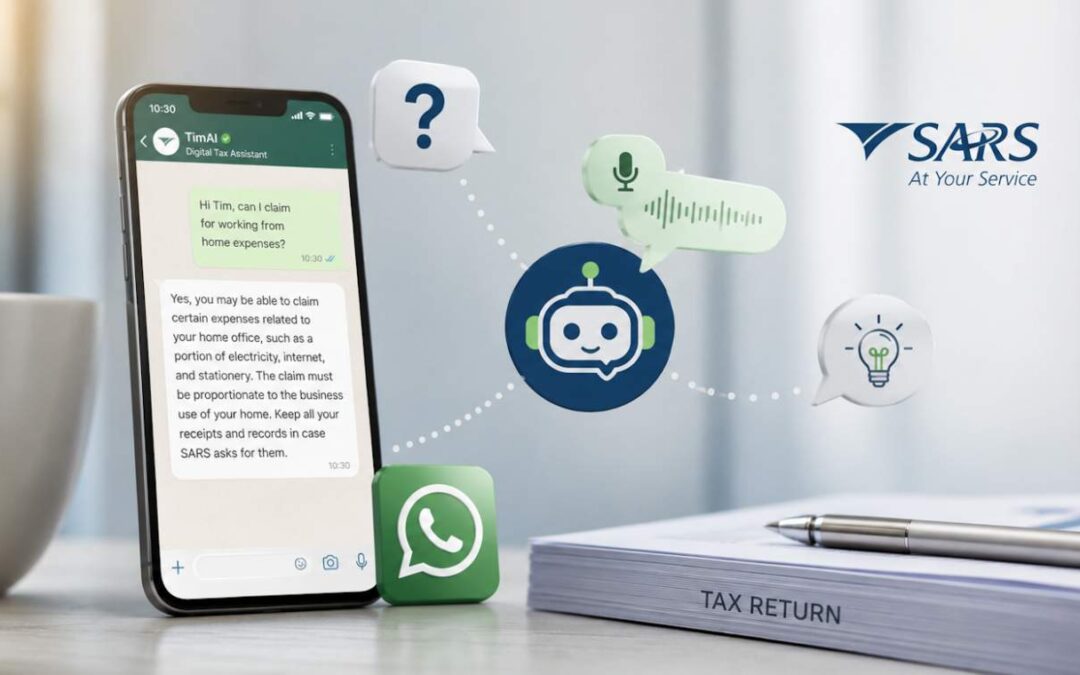
SARS has embarked on various initiatives to improve communication and engagement with taxpayers, including legitimate WhatsApp engagements as part of its broader debt-collection and compliance initiatives.
In March 2026, SARS confirmed that it had issued bulk WhatsApp notifications to 73 560 suppliers registered on the Central Supplier Database. The communications warned that outstanding tax debt could result in SARS invoking section 179 of the Tax Administration Act to recover amounts through third-party appointments.
Further communications followed in June 2026, alerting suppliers to potential compliance concerns arising from under-declarations.
What is clear from this is that SARS is increasingly using digital communication to identify compliance concerns, engage taxpayers, and pursue recovery of outstanding liabilities.
The distinction is therefore not whether SARS uses WhatsApp, but whether the communication is genuine.
Taxpayers should independently verify any alleged liability through official SARS channels, including eFiling, the SARS MobiApp, or engage with a tax specialist to independently verify their compliance status.
Even the most sophisticated scam, however, cannot change an uncomfortable reality, where a taxpayer genuinely owes SARS money. The debt does not disappear simply because the message notifying you about it is fraudulent.
The real danger is an outstanding SARS debt
For taxpayers who are already behind on their tax obligations, a legitimate SARS communication should be treated as an opportunity to address the problem, not another notification to ignore.
While a taxpayer may already be expecting coal for Christmas, it must be borne in mind that SARS has extensive debt collection powers. This includes section 179 of the Tax Administration Act, which enables SARS to appoint a third party to pay money which is held for, or owed to, a taxpayer, directly to SARS in satisfaction of outstanding tax debt, subject to the applicable statutory requirements.
For individuals, this could mean funds being deducted directly from their bank accounts and paid to SARS. For businesses, the consequences may extend to amounts owed by customers, potentially disrupting cash flow and the ability to meet ordinary operating expenses.
Neither option prohibits SARS from pursuing a civil judgment, resulting in assets being attached and sold at auction to satisfy the tax debt.
Imagine preparing for Christmas, only to discover that money intended for gifts, holiday expenses, salaries, or suppliers, has been redirected towards an outstanding SARS liability. Not exactly the type of Christmas gift one would like to receive!
Taxpayers experiencing genuine financial difficulty should however understand that immediate settlement of the full liability is not necessarily the only available option. Depending on their circumstances, they may qualify for an instalment payment arrangement or, where the statutory requirements are met, a partial write-off of the tax debt.
The important consideration is timing, as waiting until SARS initiates collection action can make an already difficult financial position considerably worse.
Give yourself the gift of a tax compliant status
Nobody wants to wake up on Christmas morning to find their bank account empty. Whether the money has gone to a fraudster or has been deducted by SARS, the financial consequences can be equally unpleasant.
Rather than waiting for an unexpected WhatsApp, a final demand or a notice of judgment, take the opportunity to review your tax affairs before the festive season gets underway.
The best Christmas gift you can give yourself is to enter 2027 knowing exactly where you stand with SARS.
Ensure that outstanding returns have been submitted, assessments have been reviewed, and any unpaid liabilities or unresolved compliance issues have been identified.
For businesses, particular attention should be given to VAT, PAYE and corporate income tax obligations. An overlooked liability can quickly become a significant compliance issue, particularly when cash flow is already under pressure during the festive season.
Knowing that your tax affairs are in order also gives you an important advantage – a compliant taxpayer can be certain that any WhatsApp demanding payment is definitely a scam.
Avoid a nasty surprise under the Christmas tree
This Christmas, don’t leave your tax affairs to Father Christmas. Check your compliance, establish your actual SARS debt position, and address outstanding matters before entering the New Year.
Proactive engagement mitigates the risk of aggressive collection steps being taken by SARS, and managing a tax debt through legal debtrelief mechanisms will allow you to enjoy the festive period with peace of mind.
If you are uncertain about your compliance status or have received a fraudulent WhatsApp message regarding a tax debt, review your eFiling profile or seek professional assistance from experts who are well equipped to assist with remedying any non-compliance.
This post was based on a press release issued on bahelf of Tax Consulting SA.



0 Comments