
If you’ve decided that 2023 is the year to take control of your finances, try this 12-month financial plan to get your financial life into shape.
 The biggest mistake we make when it comes to our financial goals is that we make big resolutions like “I will pay off all my debt.” What you really need are small resolutions that are easier to commit to, but which help you towards achieving the ultimate goal.
Choose a single action in each category of your finances. You’ll be surprised at how large an impact even a small action can have.
- If you want to reduce your debt, a small goal may be to pay off one debt this year.
- If you want to start creating wealth, commit to opening an investment account and start investing, even if it is just R300 a month. Even small contributions to your investments and debt reduction have a positive impact on your net worth.
- To take control of your spending, commit to a one-month spending diet where you will not spend any money on non-essentials.
A great way to give your finances a good shake-up during 2023 is to follow this month-by-month plan so that your finances and admin are all up-to-date by the end of the year.
The 12-month financial plan: Month by month
In January: Update your budget and plan for expenses
Write up a budget. Pull out your bank statements and keep track of your day-to-day spending so you get a handle on where your money is actually going. Plan and save for major expenses such as school tours, a major car service, or holidays.
In February: Sort out your taxes
This is a good time to make sure you are optimising your tax deductions. You can top up your retirement annuity and contribute to a tax-free savings account. Find out what expenses you need to keep track of and start getting your supporting documents in order for your tax return.
In March: Review your insurance
Shop around and compare quotations from other insurers but make sure that you know what cover each insurer offers for the premiums you pay. You may find that one insurer offers you cheaper premiums but will charge you a much higher excess when you make a claim. Review your life insurance needs if you have had a child, gotten married, changed jobs, been retrenched, or received a raise.
In April: Review your will
Any life changes such as a marriage, divorce, or having children will require you to update your will. If you don’t have one, write it up now.
In May: Review your budget and create a debt repayment plan
Now is a good time to review the budget you set at the beginning of the year. Are you on track or have you been overspending? What can you cut back on to create some extra cash? Use this to settle your debts sooner or add to savings.
In June: Medical check
How much money is still available in medical funds? Plan your annual preventative check-ups such as dental or your pap smear.
In July: Focus on savings during savings month
Sometimes the hardest part of saving is opening the account! If you don’t yet have a tax-free savings account, commit to opening one now. Do a review of your existing investments to ensure they still meet your needs. If your long-term savings are sitting in cash, you need to look at higher-growth investment options.
In August: Think big
Set time aside to think about your long-term goals and how to achieve them. Talk to your partner about money and bring in a financial adviser if necessary so that you can plan your future together.
In September: Spring clean
Clean your clutter and get your admin filed and sorted. Draw up a list of all your policies, accounts and investments so they are easily available in one place.
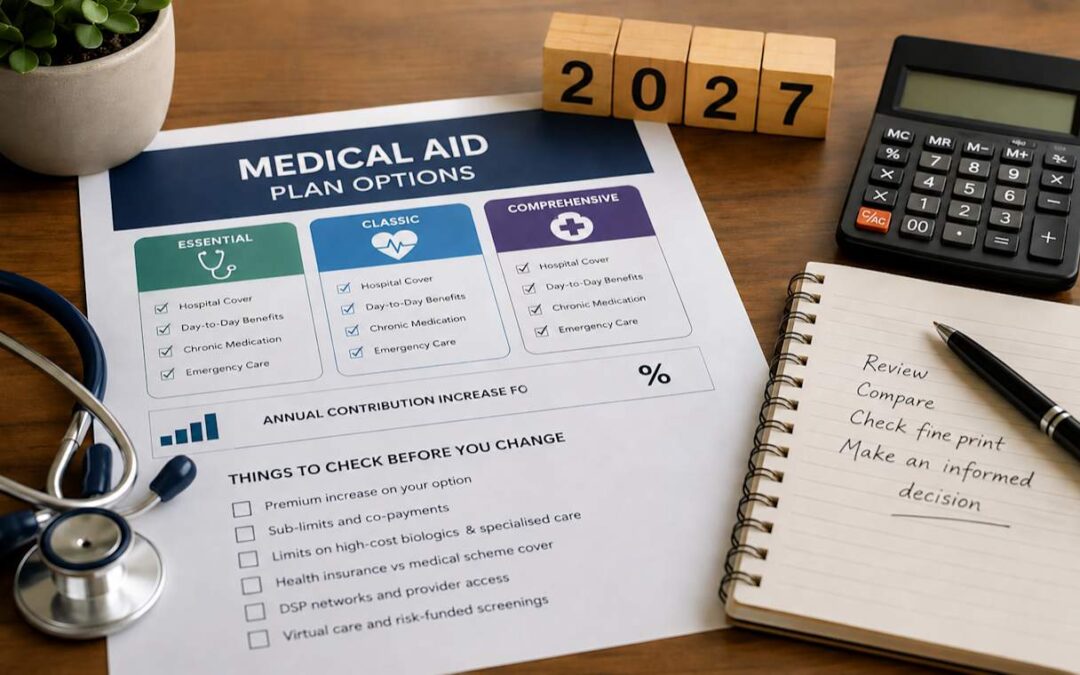
In October: Review your medical scheme
Medical scheme increases are released this month and you have the opportunity to select your plan for next year. Compare your medical needs with the benefits you can receive and the premium you are expected to pay for those benefits.
In November: Create a festive season plan
This is the time to plan how you are going to manage your festive-season spend. Start having conversations with your family about expectations and budgets.
In December: Be prepared
Don’t forget that you still have to pay debit orders in December and account for them before you spend any money. Remember it is a long way to your January paycheque and after all the parties are over and the visitors have left, you still need to buy groceries and pay for electricity among other regular costs.
This article first appeared in City Press.





I debt free, I have emergency fund, I’m saving and investing 20% of my salary. My problem is still budgeting, I just don’t like budget because of admin that goes with it. I tried spreadsheets, in tried apps, but I’m failing. Can this weakness ruin my finances or for as long as I’m doing well in other areas this should not be a concern? Please advice
It sounds like you are a natural! Budgeting helps people find the money to pay off debt or increase their savings/investments by identifying where they could afford to cut back. If you are saving and investing and have no debt, it is not a major problem area for you. I would suggest that you do some homework on your retirement plan – is 20% enough based on your existing investments and years to when you want to retire? Another nice calculation to do is your net asset value https://mayaonmoney.co.za/2019/12/why-the-net-worth-calculation-trumps-how-much-you-make/
Thank you Maya for such detailed info, now am seeing all along what we’re my mistake. This 12 month Financial Plan have shared with Family n Friends.
Glad you found it useful
Great insights, as always.
Thank you Maya
This is so doable, no complications. I am on it.
So profound and achievable, I need the discipline and conviction to follow this through… Fuel costs always throw me under and vehicle service routine are my biggest money drainer.
Fuel was an absolute killer for us in December with holiday travel! In terms of the vehicle maintenance, start a contingency fund – you can do this with an savings pocket linked to your banking app. Estimate how much your car service will be and divide that by the number of months until the service. That will give you an idea of how much you should be putting away each month to cover that expense.
Can you recommend a tax free savings account please. And are there limits to how much one can save with it being totally tax free ?
Thank you
I am not allowed to give specific fund advice but all investment houses offer a tax-free fund option. If you already have investments with a fund manager then ask them about a TFSA option. If you bank with FNB they have a very low cost option on the App. Another low cost option is something like Satrix – but you want to select a well diversified fund that has both local and international exposure. This article may help https://mayaonmoney.co.za/2019/05/how-to-choose-an-etf/
In terms of your question regarding the limits. You can only invest up to R36 000 a year for it to be tax-free and a lifetime limit currently of R500 000 (so that would only be an issue in about 14 years if you contributed the maximum of R36 000 a year)
I love this framework. Thank you for all the good you do in our society Maya.
Thank you for the feedback
So clearly articulated. Thank you.
Thank you very much.
I hope it helps you this year 🙂
Honest truth, a plan is needed all the time
glad you found it useful