
Tens of thousands of South Africans face an ongoing squeeze on household budgets, driven by rising fuel prices, food inflation, and mounting expenses. This has led to difficult choices for many households.
Unfortunately, vehicle finance repayments are often among the first obligations that become hard to maintain.
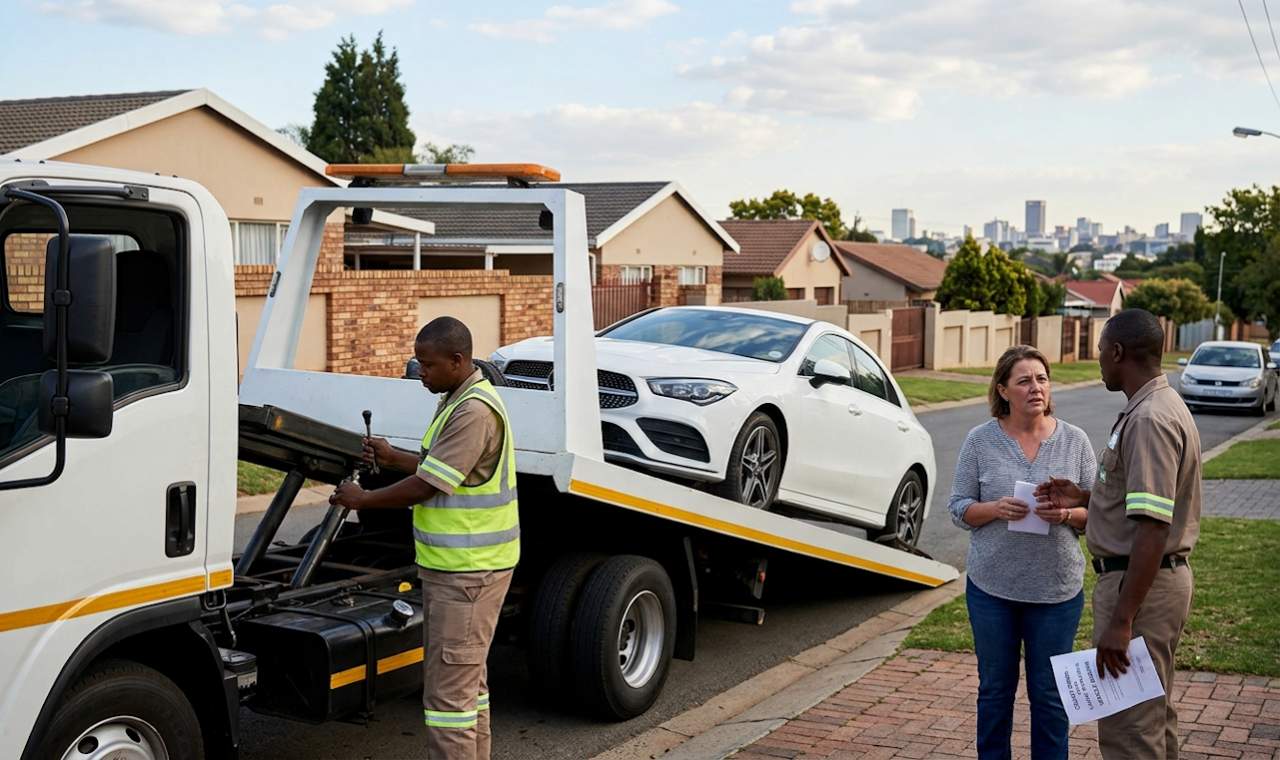 According to data from the National Credit Regulator (NCR), more than 22 600 vehicles were repossessed in South Africa in the first six months of 2023 alone. That’s an average of almost 3 770 per month.
However, being in financial distress does not mean you lose the protection of the law. As highlighted in a recent media release by the National Financial Ombud Scheme South Africa (NFO), banks and credit providers cannot simply seize a vehicle at will. Repossession must strictly adhere to prescribed legal procedures.
Here is what every consumer with a financed vehicle needs to know about their rights, the legal process, and how to avoid costly pitfalls.
Difference between voluntary surrender and repossession
Nerosha Maseti, Lead Ombud of the Banking and Credit Division at the NFO, emphasises that consumers often confuse voluntary surrender with legal repossession.
There are two distinctly different processes under the National Credit Act (NCA):
Voluntary surrender (Section 127 of the NCA)
- Initiated by: The consumer
- Process: You give written notice to your bank expressing your intent to surrender the vehicle. The bank then evaluates and sells the vehicle in accordance with strict NCA procedures, sending you official notices regarding the valuation and sale proceeds.
- Key Rule: A bank cannot force you into a voluntary surrender, nor can it treat mere possession of a vehicle as proof that you surrendered it voluntarily.
Repossession
- Initiated by: The credit provider (the bank)
- Process: When a consumer defaults on repayments, the bank must initiate legal enforcement. To legally repossess and sell the vehicle without your voluntary consent, the bank must obtain a court order or judicial authorisation.
- Key Rule: The only legal ways a bank can take possession of your vehicle are either with your voluntary written consent or via a court order.
Real-life cases
The NFO regularly receives complaints about repossession disputes, voluntary surrenders, and improper sales after default. Two recent cases demonstrate that banks must follow the law, even when a consumer is in arrears.
Case 1: The impounded minibus taxi
A minibus taxi was impounded at the South Africa–Zimbabwe border after illegal substances were found on a passenger.
Authorities confirmed that neither the vehicle owner nor the driver was involved in any criminal activity. However, instead of returning the vehicle to the owner, it was handed over to the financing bank, which retained possession without following proper legal procedures.
Although the consumer was at fault for allowing the taxi to cross the border without complying with her finance agreement terms, the NFO ruled that the bank had unlawfully retained the vehicle while arrears accumulated.
Outcome: The bank accepted the NFO’s recommendation to pay the consumer R30 000 for distress and inconvenience, and to write off all legal and storage fees charged to the account.
Case 2: The R300 000 shortfall erased
A bank repossessed and sold a consumer’s vehicle after collecting it from the consumer’s employed driver. The bank claimed it was a voluntary surrender, but could produce neither a signed voluntary surrender agreement nor a court order authorising the repossession.
After the vehicle was sold, the bank pursued the consumer for an outstanding shortfall of approximately R300 000.
The NFO concluded that despite the consumer being in significant arrears, the bank could not bypass statutory legal safeguards.
Outcome: The bank accepted the NFO’s recommendation to write off the entire R300,000 shortfall.
What happens to the debt after a vehicle is handed over?
Handing back your vehicle – whether voluntarily or through repossession – does not automatically clear your debt.
- Shortfall: If the vehicle is sold for less than what you owe on the finance agreement, you remain legally responsible for paying the remaining balance (the shortfall).
- Surplus: If the vehicle is sold for more than the outstanding balance, the credit provider is legally required to refund the excess amount to you.
Practical tips for consumers with financed vehicles
To safeguard your financial standing and protect your legal rights, the NFO recommends taking the following steps:
Act early: Contact your credit provider as soon as you anticipate financial difficulty. Don’t wait until you receive legal enforcement notices or fall behind on multiple payments.
Don’t ignore notices: Regularly check and read emails, SMS messages, letters, and court documents from your bank. Keep your contact details updated.
Know which process is underway: Make sure you clearly understand whether you are signing a voluntary surrender form or dealing with legal enforcement.
Understand what you’re signing: Read all consent forms or voluntary surrender agreements carefully before signing. Never sign anything you don’t understand or agree with.
Demand proof of authority: If someone arrives to collect your vehicle, demand identification, ask who they represent, and request to see formal legal authority (such as a valid court order).
Maintain written records: Make sure you have a full paper trail. Keep written copies of all communications, payment arrangements, notices, and settlement figures.
Contact your finance provider: If you suspect your bank or vehicle finance provider has repossessed, retained, or sold your vehicle unlawfully, lodge a formal complaint with the finance provider.
Contacting the National Financial Ombud Scheme
If your dispute with a vehicle finance provider remains unresolved, you can approach the NFO for free, independent, and impartial assistance.
- Telephone: 0860 800 900
- WhatsApp: 066 473 0157
- Email: info@nfosa.co.za
- Website: www.nfosa.co.za


0 Comments