
Imagine the scenario: you apply for a R30 000 credit card limit, but are rejected due to a low credit score – and then the exact same bank turns around and offers you a R135 000 personal loan instead!
It sounds counterintuitive. How can a massive loan pose less of a risk to a bank than a smaller credit card limit that they can adjust or cancel at any time?
I recently investigated this puzzling scenario after a reader, Chris, shared his experience with me.
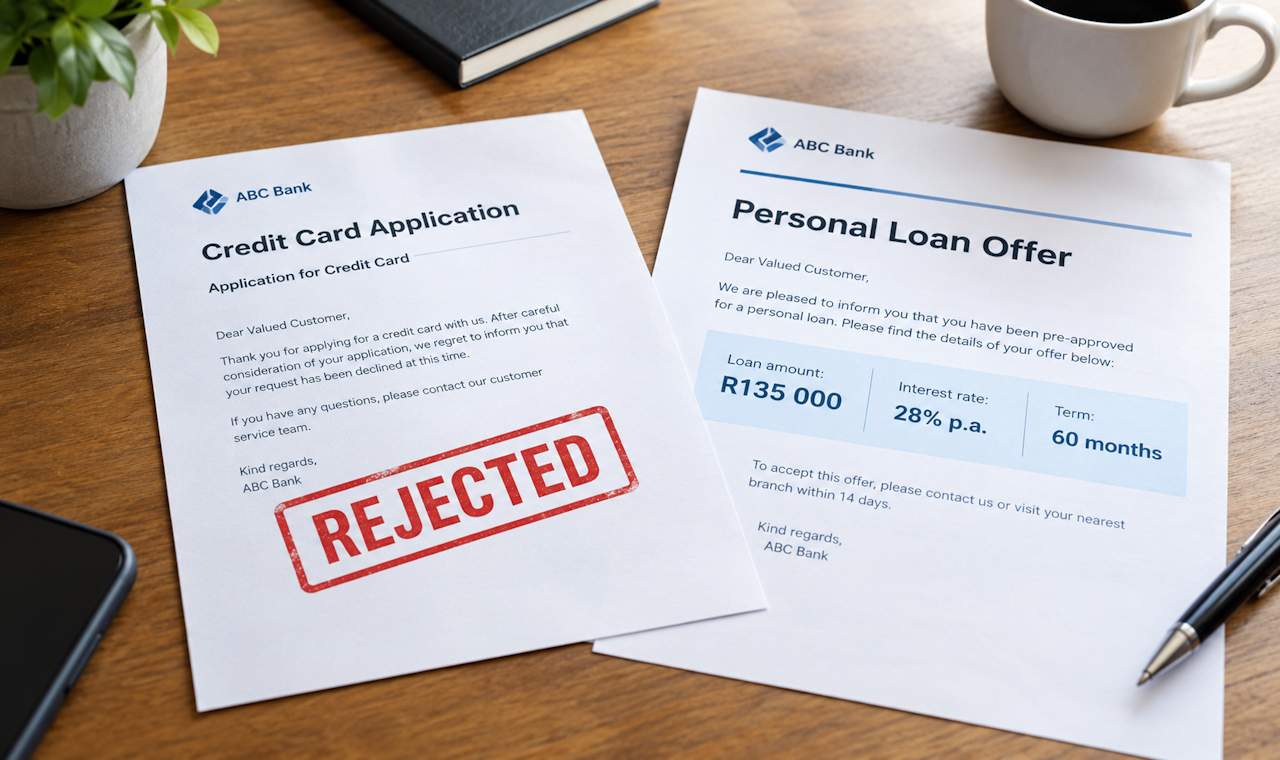 Chris is completely debt free, owns paid-up property, and has a strong net worth. Yet, because he hadn’t used credit in over two years, his credit score dropped to 626, which is just below the 650 threshold typically required for a credit card.
Despite being turned down for a card, Capitec offered him a R135 000 personal loan at an interest rate of 28%. When he tried applying for a card at Discovery Bank, he hit the same wall.
So why are South African banks becoming far more conservative with credit cards while remaining so willing to hand out personal loans?
Term loans vs revolving credit: the risk factor
According to banks and credit bureau TransUnion, the key comes down to product design and regulatory risk.
A personal loan is a fixed-term facility. The amount of the loan is known in advance, the repayment schedule is specified, and the bank knows how the debt will decrease over time.
A borrower usually takes out a personal loan for a specific, budgeted purpose.
A credit card, on the other hand, is an open-ended facility. You can swipe, pay back, and swipe again.
Because consumers often use revolving credit during times of financial stress, or for impulse purchases, banks are exposed to much higher ongoing risk.
Even if you only use a fraction of your card limit today, the bank must set aside capital against the risk that you might max it out tomorrow.
As a result, credit card qualifying criteria have become noticeably tighter across the banking industry.
Shift in risk management
Data from TransUnion shows a clear shift in how banks are managing risk.
- Credit card applications dropped by 9.5% in early 2026 compared to the previous year, while personal loan applications rose by 2.5%.
- After aggressive post-COVID growth, banks are moving away from issuing new credit cards. Instead, they prefer raising limits for existing, low-risk customers.
- Credit limits for new applicants with lower credit scores (below 625) dropped from an average of R22 000 in 2024 to R13 000 in 2026. Conversely, borrowers with high scores (above 696) saw average limit offers rise from R47 000 to R57 000.
How to rebuild your credit score
If you find yourself in a position like Chris, where a period of being debt free has caused your credit score to drop, you need to build up a fresh repayment track record.
Here are some tips:
- Start small: Consider applying for a credit card with a very low limit (some banks offer starting limits as low as R600).
- Use and settle: Use the card for minor, everyday purchases and pay the full balance off every month.
- Build history: Demonstrating consistent, responsible usage over time will boost your score and open the door to higher limits and better rates later on.
For a deeper breakdown of the TransUnion data, bank statements, and Chris’s full experience, you can read my original reporting on News24.





0 Comments