
When selling your home, one of the less frequently discussed (but important) considerations is the need for several Certificates of Compliance (CoCs).
These CoCs are required prior to the official transfer of a home, as proof that some of the non-negotiables of the home are in good working order.
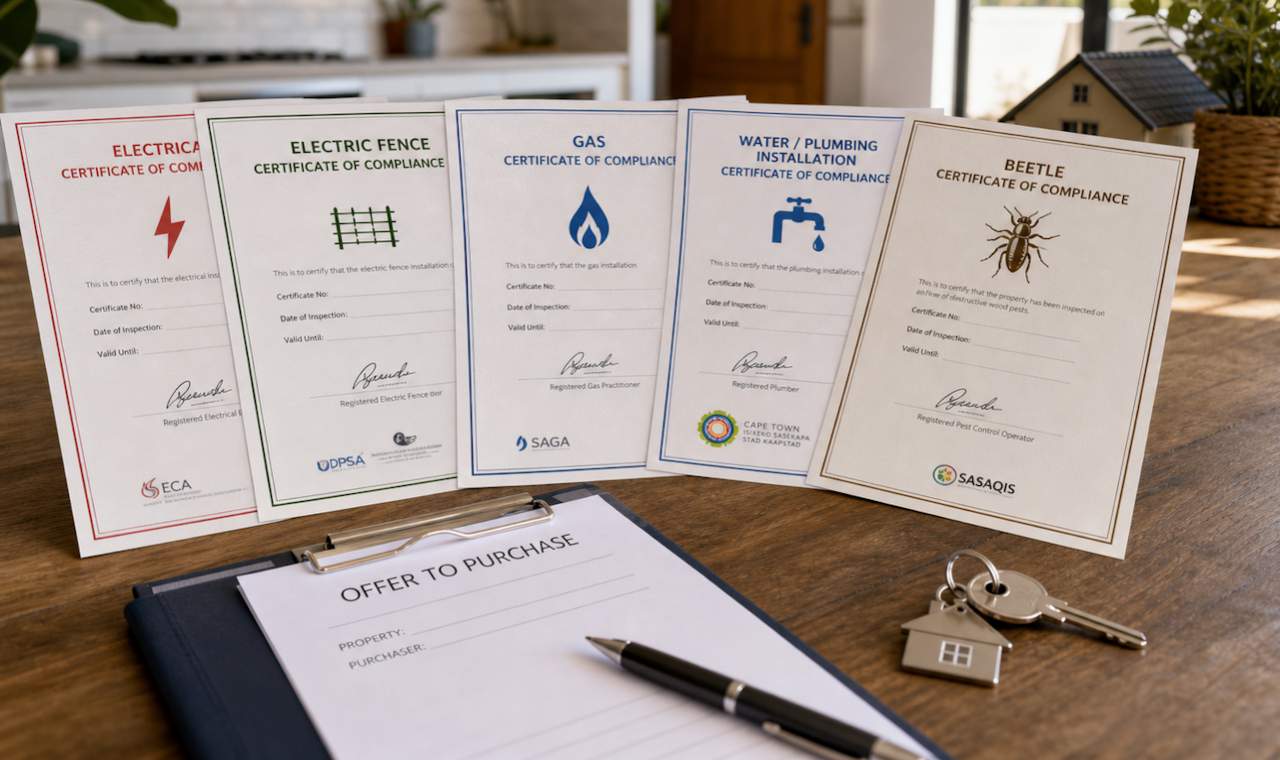 “While these CoCs must be completed prior to transfer of ownership, in order to avois delay, the ideal time to secure them is in fact upon signing the Offer to Purchase (OTP) – or even prior to listing the property,” says Gavin Lomberg, CEO of ooba Home Loans.
Lomberg highlights that the seller is responsible for the costs associated with the issuing of CoCs.
The five CoCs that sellers should take note of are:
- Electrical Compliance Certificate
- Electric Fence Certificate (only applicable to a home with an electric fence)
- Gas Certificate (only applicable to a home making use of a gas cooker)
- Water/Plumbing Installation Certificate (only required in the City of Cape Town)
- Beetle Certificate (not mandatory but it is customary in coastal areas).
“These certificates can only be issued by registered professionals and are dependent on a physical inspection of the property. Should the property not pass the compliance inspection tests, the seller is responsible for the cost of the work necessary before transfer of ownership to address the faults identified during the inspection.”
Ben Chiroro, Associate for STBB Attorneys and partner to ooba Home Loans, adds that compliance is key when it comes to this process.
“Beyond homebuyer peace-of-mind, some of these certificates are legally required for the transfer of a home, and, depending on when they were carried out, an updated compliance certificate could be required.”
Key things to know about the five CoCs
Electrical Certificate of Compliance (valid for two years)
“Regulation 7(1) requires every homeowner to have a valid Electrical CoC, along with an approved test report. This means that even if you’re not selling your property, you must still hold a valid electrical CoC of less than two years,” says Chiroro.
Speaking to the importance of an Electrical CoC, he adds, “Regardless of whether you have a tenant in the property or live there yourself, you, as the owner, are responsible for the safe and correct electrical installations in your home. The CoC therefore certifies the safety of the installation.”
Lomberg highlights that without a valid Electrical CoC, the property transfer cannot be completed.
“Costs for this particular CoC depend on the amount of work required, and can range anywhere from R1 000 upwards.”
Important to note is that any additional installations implemented after the certificate has been issued – like an inverter or solar system – will require a supplementary certificate.
Electric Fence Certificate of Compliance (valid for two years)
An Electric Fence CoC serves as proof that the electrical work on your fence complies with the requirements of the Occupational Health and Safety Act and meets the South African National Standards (SANS 10222-3:2012).
The cost of obtaining this certificate ranges from R550 upwards, depending on the amount of work required.
“If non-compliant, the property will not be transferred and the owner runs the risk of rejected insurance claims in a case where someone is injured – regardless of whether they were an intruder or not,” says Chiroro. He adds that this certificate is transferrable.
Furthermore, Chiroro notes that this CoC generally applies to freehold properties only, with the Body Corporate being held responsible for electric fence compliance in most sectional title property blocks.
Gas Certificate of Compliance (valid for around five years)
“In cases where the property makes use of liquid gas, this mandatory CoC must be issued by an authorised person or approved inspection authority after the completion of a gas installation, modification, alteration or in this case, a change of ownership,” shares Chiroro.
He adds that this CoC is vital in proving that the installation complies with the Occupational Health and Safety Act.
“A gas leak from an incorrectly installed appliance poses serious health risks and could even result in an explosion,” says Chiroro.
The cost of obtaining the certificate varies anywhere from R1 000 to tens of thousands of rands depending on the amount of work required.
While there is no formal regulation on validity, Chiroro notes that the Gas Association typically recognises certificates as valid for five years.
“It’s best to obtain a fresh certificate with every transfer to avoid any issues with changing regulations and to offer the buyer added peace of mind.”
Water/Plumbing Installation Certificate of Compliance
This particular CoC is only mandatory in the City of Cape Town as per local by-laws.
“For property sales concluded in Cape Town, this certificate verifies that the water meter is functional, that there are no leaks or defects causing water waste, that stormwater is not discharged into the sewer system, and that the water installation complies with the National Building Regulations and local by-laws,” says Chiroro.
The responsibility to obtain this certificate lies with the seller and should be obtained prior to transfer.
“While the by-law doesn’t explicitly say that it must be provided to the buyer, it has become common practice to include this in the OTP so that the buyer is assured that the property complies,” says Lomberg, adding that it typically costs between R500 and R1 000.
Beetle Certificate of Compliance (valid for around 3 – 6 months)
While this CoC is not mandatory, some homebuyers may request it – especially in coastal regions like the Western Cape and KwaZulu Natal.
“This CoC proves to the buyer that the property is free of destructive pests like termites in homes where there is a lot of structural timber installed,” says Lomberg.
The checks must be carried out by a qualified pest-control inspector or entomologist and the cost ranges from R500 to R1 000.
Brush up on your knowledge
Lomberg urges any sellers – and potential sellers – to think ahead when it comes to acquiring these Certificates of Compliance.
“The last thing that you want is to delay the transfer of your home,” he says.
“We also encourage buyers to brush up on their knowledge and to ask the right questions when it comes to CoCs,” concludes Lomberg
This post was based on a press release issued on behalf of ooba Home Loans.


0 Comments