
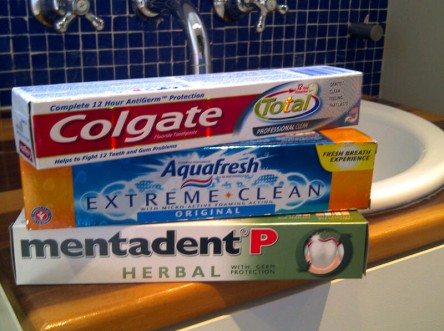
 Your favourite brand of toothpaste, chocolate, chips, rice or tomato sauce may be costing you the same, but are you getting the same amount of product for your money?
As consumers watch their pennies some manufacturers are shrinking the amount of product they put into their packaging in order to keep prices down. Consumers are not being informed of these changes which are often difficult to notice as the packaging remains the same. While the manufacturer may include the new weight or volume on the packet, how many consumers read these or remember what the volume was the last time they bought the product?
Examples include Colgate toothpaste which reduced from 100ml to 75ml. All Gold Tomato sauce reduced from 750ml to 700ml and Cadbury’s reduced the volume of its luxury chocolate slabs such as wholenut and fruit and nut from 100g to 90g and 200g to 180g. Many cold drinks have also decreased their volumes from 340ml to 330ml.
Thami Bolani , chairman of the National Consumer Forum says pack shrinkage is widespread across many products like toothpaste, chocolate, rice and beverages and is indicative of a much wider problem where manufacturers are not putting enough information on their labels,
“Pick n Pay has found for quite some time that some suppliers of national brands reduce the size of the content of their products in order to offset potential price increases,” says Peter Arnold, Pick n Pay’s Acting Merchandise Director.
Brenda Koornneef, executive of Group Marketing & Corporate Strategy at Tiger Brands who manufactures All Gold tomato sauce says the decision to reduce the volume at the end of 2010 was driven by rising costs.
“Costs of raw and glass packaging materials had escalated dramatically over the prior 18 months and we had absorbed these cost increases as far as possible, but were no longer able to do so,” says Koorneef who says Tiger Brands, after following other cost efficiency measures, made the decision to reduce the size of the bottle. “This enabled us to hold off taking a price increase and impacting on consumers’ ability to purchase their All Gold tomato sauce”.
Pat Senne, head of communications at Kraft Foods (SA) which bought Cadbury’s in 2010, says the decision was based on the fact that the cost of product inclusions such as fruit and nuts increased at a rate ahead of inflation. “Cadbury was faced with the choice to either increase the price of the whole Dairy Milk range or reduce grammage per slab of these two particular nut variants. We felt reducing the size would ultimately be a better option for consumers, and our trade partners who prefer to line price our product range”.
Lowering the impact on the consumers pocket may be an acceptable motive but the concern is that it is not communicated to consumers who do not realise they are being short-changed. Where are the adverts saying “we have reduced the volume to keep the price down”?
As a result consumers are not able to make effective buying decisions as they are not aware that one brand is offering 25% less product than another brand.
Toothpaste company Aquafresh has been incensed enough to run a campaign about pack shrinkage after its competitor Colgate reduced the volume of its product without informing consumers.
Liezel Sabbagh marketing Director of GlaxoSmithKline which manufacturers Aquafresh and other consumables like Lucozade and Grandpa says that the company has taken an ethical stand and will not partake in pack shrinkage across any of its brands.
Sabbagh says pack shrinkage is not unique to South Africa and has been going on for years in other countries. Consumers are finding fewer diapers per packet, fewer cider cans per case, slimmer chocolate, less orange juice in the carton, less ice-cream in a traditional pint size and one brand of US toilet paper reduced the number of sheets and made the toilet paper narrower whilst describing it as “our thickest ever”.
But how do you as a consumer know if you are still getting the same value for money? Major retailers like PickPay, Shoprite and Checkers carry labels on their shelves which calculate the price of the product per gram or millilitre. By comparing what one is paying per unit is one way to compare like with like.
However the labelling is not always detailed enough. In the case of a strip of 4 packets of chips, PicknPay labels the cost per packet, however Simba’s cheese puffs has 16g per packet compared to PicknPay’s no name brand’s 20g. Simba’s per packet cost may be R1.87 to PnP’s R1.92 but Simba works out at 12c/g compared to PnP 10c/g.
Sarita van Wyk, corporate communications manager for Shoprite Holdings says consumers need to be a lot more vigilant when making purchases. Historically bulk buying was cheaper and many consumers still believe that if they buy a product in bulk it will cost them less per unit. However that is no longer the case. Van Wyk says it is the most popular package size that tends to be better priced.
This article by Maya Fisher-French was first published in the City Press






0 Comments