
Carmen Nel, economist and macro strategist at Matrix Fund Managers, delves into the implications of last week’s 50 basis-point rate hike by the Reserve Bank.
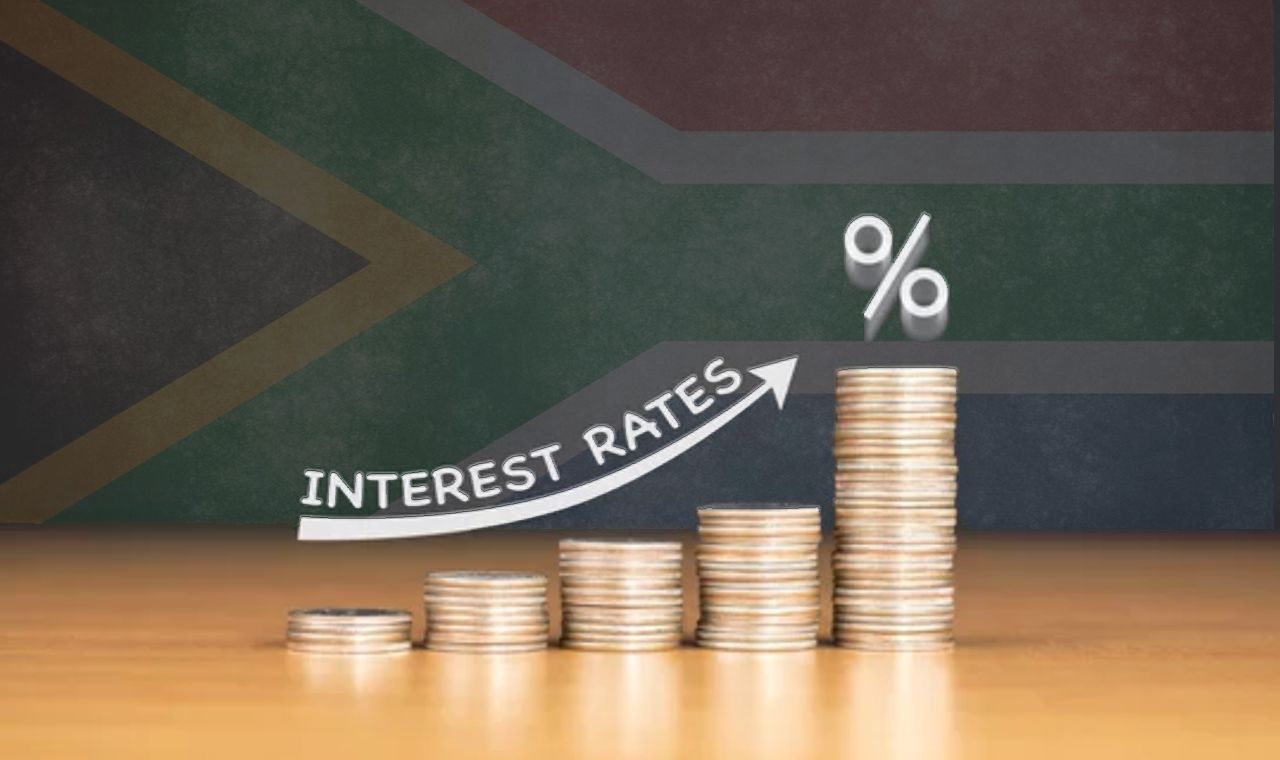 At Thursday’s Monetary Policy Committee (MPC) meeting, the South African Reserve Bank (SARB) hiked the policy rate by 50 basis points, to 4.75%.
This was in line with consensus expectations and market pricing. As such, the outcome was not a surprise. However, the post-meeting Q&A session reflected that there was some concern that the increment was excessive given the subdued growth outlook.
The SARB is certainly aware of downside risks to growth, but much of the fragility lies outside the purview of monetary policy. Rather, weak potential growth is due to persistent and pervasive constraints, such as electricity, as well as cyclical weakness due to the floods in KZN.
Further reading: Why interest rates are rising
If anything, the SARB is concerned that rapidly rising prices will hurt growth via constraining consumption power, particularly for the poor.
Hence, from a domestic perspective, the 50bp rate hike aims to ensure that medium-term inflation outcomes and inflation expectations are aligned with the 4.5% effective target. Importantly, the inflation risks – directly from food, the rand and oil, and indirectly from expectations and wages – are firmly to the upside.
Rate hike influenced by global factors
That said, we have to acknowledge that setting monetary policy in a small open economy is not only about domestic conditions. The SARB must be cognisant of global financial conditions. As such, today’s larger rate hike was at least partly driven by the faster pace of tightening from the Federal Reserve in the US, elevated global market volatility, and heightened inflation uncertainty.
Heading into today’s meeting, there were some views that the SARB was falling behind the domestic inflation curve. While we disagree with this assessment, there was some risk that the SARB would fall behind the global monetary policy curve.
Today’s rate hike and reinforcement of the central bank’s inflation-fighting credibility probably puts the bank ahead of the domestic inflation curve and better aligns the local policy stance to global dynamics.
This view was borne out by the price action in the market. The rand and domestic bonds reacted positively to the outcome, which suggests that the level of the policy rate is not yet a concern for the growth outlook.
Rather, the prudent approach by the SARB in the face of elevated inflation risks should reduce the risk premium embedded in SA asset prices.
While the outcome was in line with expectations, the tone of the statement was not quite as hawkish as we and the market had been expecting. While certainly not dovish, the tone was not alarmist. Moreover, the 4:1 split in the vote had a dovish tilt, with one member favouring a 25bp hike.
There was some concern leading up to the meeting that the dissention would be for even more aggressive tightening. Not only did this not transpire, but the statement also suggests ongoing measured tightening, rather than an outright accelerated pace of normalisation.
Looking ahead, the size of the next rate hike will depend on how global financial markets and the rand absorb sequential 50bp hikes from the Fed, in addition to the start of quantitative tightening.
The less hawkish tone in the May statement certainly reduces the probability of a 50bp hike, although it should not be ruled out.
This post was based on a press release issued on behalf of Matrix Fund Managers.






0 Comments