
At the Momentum post-budget breakfast, Momentum Securities CEO Steven Schultz said something that perfectly captures why the debate around our national budget should matter to every South African – not just economists and policy wonks.
Schultz said: “The national budget is far more than merely a set of numbers. It is a statement of priorities. It reflects our country’s challenges, our necessary trade-offs, and perhaps, most importantly, our aspirations.
 “It speaks to how we choose to allocate our scarce resources in the pursuit of growth, stability, and economic and social inclusion.”
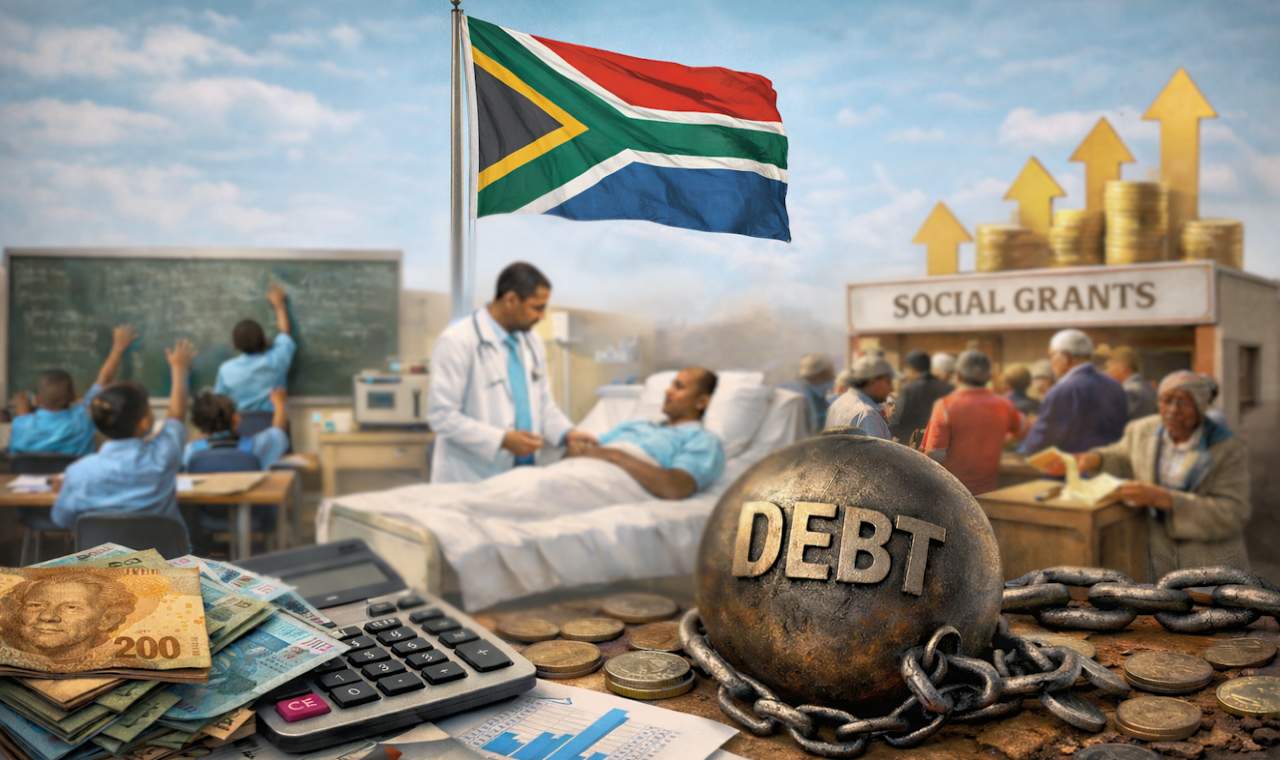
The choices that government makes today about spending and borrowing, directly affect the money available tomorrow for schools, hospitals and social grants.
A great deal has been said about the fact that this budget finally puts the brakes on the growth in borrowing by the government, and that we have achieved a primary surplus for the third year in a row.
But what does this actually mean for you and me?
What is a primary surplus?
A primary surplus means that government is spending less than it collects in revenue before it pays back debt.
This is crucial because once we add in debt repayments, the picture changes dramatically.
In the 2026/27 budget, government will spend R432.bn billion just on servicing its debt – that’s R16.20 cents of every R100 collected in revenue going straight to interest payments.
Think about that for a moment. Nearly a fifth of all the tax you pay – your income tax, VAT, fuel levies – doesn’t go towards building schools or hiring nurses; it goes to paying interest on money we’ve borrowed in the past.
Currently, even with a primary surplus of R131bn billion projected for 2026/27, government will still run an overall budget deficit of 3.7% of GDP. This means we are in a situation where government has to borrow just to pay the interest on existing debt.
Government is over-indebted
If this were your household, you would be considered over-indebted because your income is insufficient to meet your debt repayments.
You’d be living on your credit card, paying off this month’s interest with next month’s loan. It’s unsustainable, and it’s why fiscal discipline matters so much.
The good news is that the last few years of financial discipline have had a significant impact on government’s finances, with a very positive knock-on effect on households.
South Africa has been removed from the FATF greylist and we’ve received credit ratings upgrades. These have led to a stronger rand, which in turn has helped to drive down inflation. Lower inflation has led to lower interest rates – giving relief to anyone with a bond or personal loan.
In terms of government debt, the improved fiscal outlook has reduced the perceived risk of investing in government bonds. As a result, the cost at which government borrows has dropped significantly.
This, combined with a stronger currency, means that government can borrow globally at far lower rates.
Using this windfall, National Treasury has taken on additional debt in the last year at these far lower rates and will use this cheaper debt to settle more expensive debt that becomes due later this year.
It’s a bit like debt consolidation: you take out a loan at a lower interest rate to pay off more expensive debt. This has only been possible due to the fiscal discipline of maintaining a balanced budget.
The improved ratings of government debt also have a knock-on effect, reducing lending costs for banks and other credit providers, which filters through to consumers beyond the decrease in the repo lending rate.
This is positive for all South Africans because the less the government spends on debt repayments, the more it has to invest in its people.
Currently, the government plans on spending R1.58 trillion on social services – R310 billion on health and R527bn billion on learning and culture.
If debt reduces significantly and we have good economic growth, that will leave more money to spend on these critical areas.
Imagine if even half of the R432 billion currently going to interest payments were redirected to healthcare or education. We could employ thousands more doctors and teachers, build new hospitals and schools, or expand access to early childhood development.
Continued fiscal discipline is needed
The path to getting there is through continued fiscal discipline – maintaining that primary surplus and gradually reducing our debt burden.
It won’t happen overnight, and it requires difficult choices about where to cut spending and how to increase revenue.
But here’s the catch: even if we free up more money for social spending, we must ensure it’s not stolen or spent ineffectively.
The fact that we have unemployed doctors and nurses while our healthcare system is in crisis is appalling – and not necessarily due to a lack of funds, but the way funds are mismanaged and abused.
For those who expect more bang for their buck from government, a focus on rooting out corruption and improving spending efficiency is just as critical as achieving a balanced budget.
The bottom line is this: a balanced budget is not just about making the numbers add up. It’s about creating fiscal space to invest in South Africa’s future.
It’s about ensuring that your tax rands go towards building a better country rather than simply servicing the mistakes of the past. And it’s about giving the next generation a fighting chance at prosperity.
That’s why a balanced budget matters to all South Africans.





0 Comments