
Sectional title is often the more affordable way to buy a home but it comes with its own challenges and you need to be a proactive resident to ensure your body corporate is run properly.
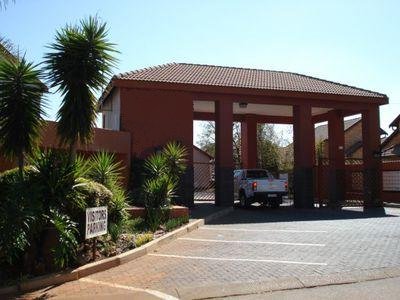 A City Press reader was recently informed by her body corporate that she had to pay a massive R10 000 special levy towards improvements at the complex including building a new entrance to the complex. “I am a pensioner and I cannot afford this,” says Nancy, who adds that she is concerned that the construction company hired to do the improvements belongs to the Chairman of the body corporate.
Nancy’s complaint is a common one for many sectional title owners, especially in the current economic times where owners, who are already paying their levies each month, suddenly find they have to pay an additional amount that they have not budgeted for.
What many new homeowners do not realise is that when they buy into a sectional title scheme such as a flat, townhouse or cluster development, they are obliged to live by a set of rules and voting decisions by the majority of owners or members; moreover they are obliged to comply with decisions taken by the trustees of the body corporate who represent all owners.
According to David Warmback of Shepstone & Wylie Attorneys, the trustees are entitled to raise special levies if the need arises. “Improvements to the common property, which appears to be what Nancy’s body corporate intends embarking on, is governed by management rule 33 of the standard statutory management rules applicable to bodies corporate,” explains Warmback.
Complete power for emergencies
The trustees alone have the power to raise special levies for emergencies. These often include necessary and unbudgeted expenses such as a broken lift or burst water pipe. Ideally the body corporate should have accumulated a reserve for such expenses, but if not, a special levy can be applied and trustees are under no obligation to consult owners in this regard.
A poorly run body corporate that has not budgeted for emergencies can end up costing residents a significant amount of money in special levies that they have not budgeted for. It is therefore important to either become involved in your body corporate or to at least attend all Annual General Meetings where the annual budget is discussed. You need to realise however that majority rules at these meetings, and that majority only needs to be 51% of the owners.
Voting for a budget
Warmback says at the Annual General Meeting a budget for the following year would be proposed and presented to members reflecting the anticipated income and expenses of the body corporate. The estimate of expenses must include a reasonable provision for contingencies and the maintenance of the common property. If it was felt that this opportunity should be used to replenish the body corporate reserves for emergencies and future maintenance and repairs, which the trustees are obliged to budget for in terms of the Sectional Titles Act and the rules, then this can be put to the vote. If 51% of the owners agree, the new budget will be approved. If the trustees follow the correct procedures and 51% of residents vote for the higher levy, there is little you can do even if you cannot afford to pay both the levy and your municipal rates.
Voting for improvements
Warmback says any improvements to the common property does require the input of owners. For a luxurious improvement to be made to the common property, a unanimous resolution must be passed. “In Nancy’s case, if it can be argued that the new entrance is a luxurious improvement to the common property, then the trustees may only proceed with such improvement if they are authorised by unanimous resolution of the body corporate,” says Warmback. A unanimous resolution involves at least 80% of homeowners present or represented by proxy at a meeting and if there is even just one negative vote, the trustees may not proceed. In other words Nancy could claim that the specific proposal for the new entrance by the trustees is luxurious in nature, attend the meeting and vote against the improvement, which would prevent the body corporate from moving forward.
The problem, however, is how one decides what is a luxurious improvement and what is not luxurious. For some complexes for example, installing DSTV may be considered a non-luxury item but for another that may be considered a luxury that the owners cannot afford.
Warmback says even if it is argued that the new entrance is a non-luxurious improvement, then before the trustees may proceed with this, they must give notice to the owners indicating their intention to do the work and provide details of the cost, the way it will be financed (usually through a special levy) and the need, desirability and effect thereof.
“Any owner can request the trustees to convene a special general meeting to discuss and deliberate on the proposals, at which meeting the owners may approve, with or without amendments, such proposals by way of special resolution,” says Warmback.
In this case Nancy would be within her rights to insist that the trustees call a meeting to discuss the issue of whether the entrance is required, the form of the proposed improvement, and how it is to be financed. The trustees may only proceed with the proposal if there is support by way of a special resolution of owners, which requires a 75% majority. Nancy may also raise the issue of whether there is possibly a conflict of interest with the Chairman’s company appointed to build the new entrance. Warmback says trustees stand in a fiduciary relationship to the body corporate and may not get any personal benefit by reason of their office as a trustee. Where a trustee fails to declare an interest in a contract with a third person, that contract can be declared void at the insistence of the body corporate. The trustee can also be held liable for any loss suffered by the body corporate.
Your powers are still limited
It is possible to apply restrictions to the body corporate especially when it comes to spending money. Warmback says the owners are entitled at an AGM to agree on certain restrictions that are applicable to the trustees, for example that they cannot spend more than an agreed amount without prior authorisation of members.
The bad news is that even if the trustees did not follow due process, the special levy would show on your levy account and if you do not pay up all levies outstanding, you would not be able to transfer your unit following a sale, as a levy clearance certificate is required from the trustees confirming that your levies are up to date. If Nancy believes that the body corporate has proceeded without due process, then Nancy’s recourse should be to resolve the matter by way of the dispute resolution arbitration process provided for in the statutory management rules. Warmback says in this case it is preferable for Nancy to ensure that as many owners as possible support her proposal for an arbitration and to share the costs of such a process.
Do your homework before you buy
Warmback says in the current economic times, more bodies corporate are in financial difficulty and there are many sectional title schemes failing – especially as owners fall behind in the monthly levy payments.
Many bodies corporate have had court orders to appoint administrators to run and administer the buildings on behalf of the owners who for various reasons – including lack of finances – have not been able to properly run and manage their complexes.
Before buying into a complex, ask to see the financials of the body corporate and find out who is running it – whether it is the residents or a third party. Try speak to current owners to find out if they are satisfied with the running of the complex and if it is a third party managing the complex, do your homework on the managing agent. A quick internet search or checking out a site like HelloPeter.com should raise any red flags.
If you are already an owner, get involved:
- Make sure you read all correspondence forwarded by the trustees or your managing agents and attend and participate at all AGMs. Your vote can only count if you participate.
- While you may not vote at meetings of the trustees, you are entitled to attend and speak at these meetings.
- Make sure you understand the financial health of the body corporate and request to see the financial statements of the complex.
- Become familiar with the Sectional Titles Act and body corporate rules which can be done through various publications which are aimed at sectional title owners and trustees.
- Know your rights so that you can stand up to trustees and managing agents who may try and take advantage of owners who often know very little about their rights and obligations.
- If you have the time and inclination, become involved by becoming a trustee.




0 Comments