
 Since its peak in 2008 the single stock futures market has fallen from around R60 billion open contracts at any one point, to around R2bn today. Maya Fisher-French explores the demise of the single stock future industry against the rise of CFD’s and what it means for retail investors
There was a time, before the great financial crisis, that single stock futures were the belle of the ball – everyone wanted to dance. Allan Thompson, the then director of equity derivatives trading at the JSE, went so far as to predict that one day all traders would trade SSF in lieu of spot prices – single stock futures were the future and ordinary trades would cease to exist.
After all why would somebody want to put all their capital into a share when they could just put down a deposit and leverage their position for even greater exposure, why buy R50 000 worth of Sasol when you could buy exposure to R500 000?
But then the great crash came and although SSF can be used to hedge the market, most people were on the wrong side of the trade and significant losses were made. Absa’s unintended acquisition of stakes in Pinnacle Point, Blue Financial Services, Sekunjalo Investments, and ConvergeNet Holdings was one of the big news stories in 2009 when clients were unable to make good on their positions.
Although not good news for Absa, it highlighted the protection that investors had when trading SSFs. The fact that SSFs are regulated and traded on the JSE with major institutions acting as market makers has always been the major advantage of SSFs over CFDs (contracts for difference); as an investor you always knew that your trade would be honoured.
CFD’s on the other hand are effectively over-the-counter instruments, and remain unregulated. As a result they did not attract the same level of interest as SSF’s, despite the fact that they are possibility the superior financial instrument. Brett McLaren, South Africa’s joint MD of Saxo Capital Markets in South Africa argued that this is all changing and CFD’s are making a major in road into the SSF market which is in part why SSF’s have failed to recover even modestly, to their pre-crisis levels.
Brett McLaren and Richard North, working atfor Nedbank Capital at the time, along with Arthur Buchner from BOE, were instrumental in the creation of the single stock futures market in 2003
“At the time warrants were a big market but then they blew up. Banks were greedy and investors never understood the product,” said McLaren who explains that the problem with warrants was investors fell victim to price decay known as “theta”. The saying “theta, theta profit-eater” warned against the fact that when the underlying share prices of the warrants remained constant, the price of the warrants still fell as they drew closer to expiry, due to the time value of money.
“This left a bad taste for investors who had got raped on bank fees,” said McLaren. However investors still wanted to find a way to have exposure to equities without having to put down all the cash. They also wanted a product that would allow them to make money in both a rising and falling market. But they needed something simpler to understand.
Single stock futures started to gain prominence in 2003 The investor only has to pay around 10% of the actual value of the share yet have close to full exposure to the price movements of the underlying equity.
Although investors would pay interest which did reduce profits over time, it was more transparent and resulted in a far less aggressive price decay compared to an option which was used to structure warrants.
The one drawback of a single stock future is that the investor does not receive the dividend and it is this that has ultimately led to its fall in popularity and the rise of the CFD as a favoured instrument.
McLaren explained that because the investor will not receive the benefit of a dividend, the market maker for the single stock future factors in the dividend when making the prices.
When dividends are declared, all things being equal the share price should fall by the dividend declared, however the shareholder would be compensated by having received the dividend. As this was not the case for the SSF investor, the market maker would discount the price of the SSF to factor in the dividend based on forecasts.
For example if a single stock future traded at R10 and the analysts forecast was for a dividend of 50c to be paid, then the market maker would discount the price of the SSF by 50c.
However if the dividend was not as forecasted, then either the market maker or investor would lose out. The investor would lose if the dividend was higher than expected as the share price would fall by a greater value and the market maker would lose if the dividend was lower than expected as it had offered a discount.
McLaren said traditionally the market maker did off-market trades and kept records of dividends. If there were any changes in expectation around the dividend then the market maker would make an adjustment and correct the situation so there were no gainers or losers.
However with the monumental success of SSF’s, the JSE wanted to regulate the market and forced the market makers to go live on screen for transparency. McLaren said now the buyers and sellers became anonymous. As a result it became impossible for investors and market makers to balance the books on dividend payments as no-one knew who was selling to whom.
This also allowed all players to see the pricing of the SSF and therefore what dividend was being forecast. This opened up a massive opportunity for arbitrage if one market maker’s view on the dividend forecast differed from another. “The banks were now focused on making windfalls on the dividends and single stock futures started being traded based on views on dividends. The man on the street got clobbered. Historically we dealt with clients directly, if we got it [dividend] wrong we would settle it up. The open screen makes it impossible; you don’t know who you are dealing with,” said McLaren.
While investors became dis-enchanted by SSFs, the emergence of big players in the CFD market started to put this previously poor cousin on the map.
Unlike SSF’s which settle every quarter, CFD’s – which are simply a contract to pay out the difference between two prices – is a one day settling contract. Profit and losses are calculated and settled daily making the pricing extremely transparent and removes any potential price decay. Most importantly the investor receives the dividend.
McLaren argues that CFD’s are far more transparent instruments, “interest is transparent and you receive the dividend. Price discovery is transparent – The price it closes at is essentially your profit and loss. You don’t have the anomaly with potentially three months interest priced into the contract. It’s a very simple instrument,” said McLaren.
It is only because they are unregulated that they have not been as popular as SSF’s. Until recently CFD’s have been run by fairly small outfits like Global Trader and Dealstream which have not had the large balance sheets to fund deals gone wrong – and there have been many cases where deals went sour. Global Trader’s London office was effectively closed down by a trader who could not meet a margin call and Dealstream hit headlines in 2008 when dramatic falls in the share price of companies found traders unable to meet their margin calls.
McLaren said now with large market participants like the banks locally, and IG Markets and Saxo Bank internationally moving into the local CFD market and effectively underwriting the deals, the risk has dropped significantly for traders.
Not only are there now large balance sheets underlying the trades, but the money and research that has gone into the trading technology has also reduced trading risk. Investors’ positions can now be closed before significant losses are made.
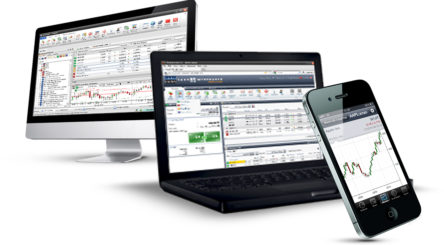
McLaren explained that one of the drawbacks of trading over-the-counter is that the underlying share price was not tracked intraday. One bad day on the markets and a client can be wiped out, forced to pay in a massive margin. “Saxo Bank has developed systems that make sure on a second-by-second basis a client knows their profit and loss situation,” said McLaren who explained that the system will actually close a contract before the client’s margin is wiped out and he goes into deficit.
With the risks around CFD’s minimized and traders burnt by the arbitration of single stock futures, CFD’s seem set to be the new preferred trading instrument – that is until an even better one is developed.
This article first appeared in InvestSA






0 Comments