
No fee increases, higher taxes
 In the medium-term budget policy statement, government committed to absorbing the 8% increase in university fees for students from households earning R600 000 or less a year. That means the majority of university students will not see any fee increases for 2017. In total, government will provide additional financial support to universities and students in the order of R10.5bn next year and R11.1bn the year after. This will be allocated for zero fee increases, subsidies and increases to the National Student Financial Aid Scheme.
Increased spending on higher education, as well as the need to keep rising debt levels in check, will see taxpayers paying R28bn in additional taxes next year and R15bn the year after. We will have to wait until the February 2017 budget review to know what exactly those taxes will entail.
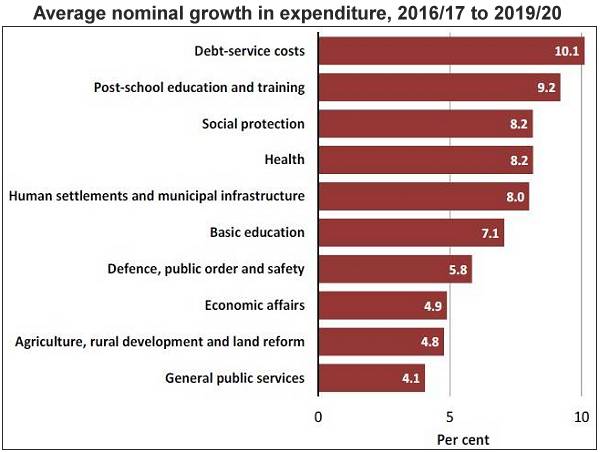
After debt repayments, higher education receives the greatest percentage increase in budget allocation, clocking in at 9.2% increase per annum over the next three years. In comparison to other social spending, higher education spending has been increasing more rapidly since 2011.

More technical colleges needed
In the media press conference held before the medium-term budget address, Minister of Higher Education Blade Nzimande raised the point that while he is happy that National Treasury has increased funding for university, attention also needed to be given to developing more technical colleges.
Nzimande added that the 40% failure rate for NFSAS students also needed to be addressed. Unless the pass rate can be improved, Nzimande argued that the NFSAS funding is money down the drain. He also raised concern about all levels of education and that perhaps an over-focus on universities was because “those students are more organised and have muscle, so we focus on them.”
Finance Minister Pravin Gordhan added that government alone cannot solve the funding issue and that discussions were taking place to look at several other funding mechanisms. National Treasury is currently looking at several proposals put forward by the private sector and students as potential solutions.
“Those people who want to save the 2016 academic year so they can move on and work with us as partners to find solutions, must become the dominant voices,” concluded Minister Gordhan.


0 Comments