
By Rob Spanjaard, Director: Rezco Asset Management.
In the fog of confusion caused by the chaos at Eskom, we lose sight of what the government has done really well in the area of power generation. Perhaps this could provide a model to get out of the morass that we are in that is dragging the whole economy down.
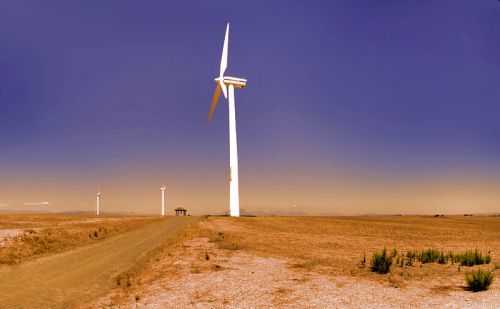 The renewable energy programme run by the Department of Energy is a leader internationally in the field of power generation, and costs for renewable energy compare very favourably to the costs of coal power.
Before the implementation of the State’s renewables programme, wind generation projects were about to be approved at a cost of R1.25 per kwh. The government, under the auspices of the Department of Energy, then did some amazing work and developed the Renewable Energy IPP programme. In 2009, companies and consortia were invited to competitively bid around clearly constructed criteria. Round one bids were accepted at 115c per kwh, round two came in at 100c, round three at 74c, and by the time round four was reached in August 2014, the price had been bid down to 62c per kwh. The same process caused solar power to be bid down from 275c per kwh in round one to 79c in round four.
This should be compared to the expected cost of 128c per kwh of new coal power from Medupi. Coal-generated cost increases to 168c per kwh if the cost of infrastructure like dams is included. The final costs of nuclear power are forecast to be higher than coal. These renewable energy projects are very profitable to the bidders, so there are increasing numbers of groups bidding for the projects available. At the last round, only 20% of bidding projects were selected.
These investments in energy benefit the country in many different ways, over and above energy generation. In the process the country got an unbelievable bargain. Currently, 5 200 MW has been approved at a capital cost of R168 billion. The project winners had to supply all their own capital. About 40% of the spend is now local content and thousands of jobs have been created. In addition, billions will be donated to community projects over the life of the projects, and all projects have to be BEE compliant.
The projects take about 12 to 18 months to get up and running from the time of approval, as compared to 10 years at Medupi. The state gets to tax the projects instead of having to subsidise a loss-making state entity. We get to protect our environment and, finally, the country gets much needed cheap electricity.
Clearly, Eskom is just not good at generating power. The utility actually has a wind power plant in the Cape that is apparently broken and not currently generating any power. This is apart from the fact that Eskom purportedly built it in a location with less than ideal wind conditions.
There are some basic lessons that can be learned from the Department of Energy’s renewable energy programme. These lessons have nothing to do with privatisation or even renewable energy. The state –anywhere in the world – works best when it regulates, takes the position as referee, forces groups to compete openly and transparently, and then taxes them. At the very least the government should analyse what has worked so spectacularly well for them in one area of power generation and apply these lessons to Eskom. The words of Winston Churchill, intended for Americans, can be applied equally well to South Africans: ‘South Africans (Churchill said Americans) can be always counted on to do the right thing after they have exhausted all the alternatives’.


0 Comments